

4-Prong vs. 6-Prong Engagement Ring: Which to Choose? Is 6-Prong Always More Secure? (Complete Analysis for 2026)
Quick Answer
A four-prong setting exposes more of the diamond, making it appear larger and more minimalist. A six-prong setting covers more of the edges, giving it a rounder, more stable, classic Tiffany-style look. Theoretically, a six-prong setting is more stable due to two extra support points, making it suitable for diamonds 1.5 carats or larger. However, a four-prong setting is also very secure if the craftsmanship is excellent. The actual factors affecting security are the thickness of the prongs, the setting craftsmanship, and regular maintenance, not solely the number of prongs.
When choosing an engagement ring, many people ask, "Is four prongs better or six prongs better?" and "Is a six-prong setting definitely more secure?" In fact, the number of prongs doesn't just affect security; it also changes the diamond's appearance, sparkle, and overall style. Below is a comprehensive analysis.
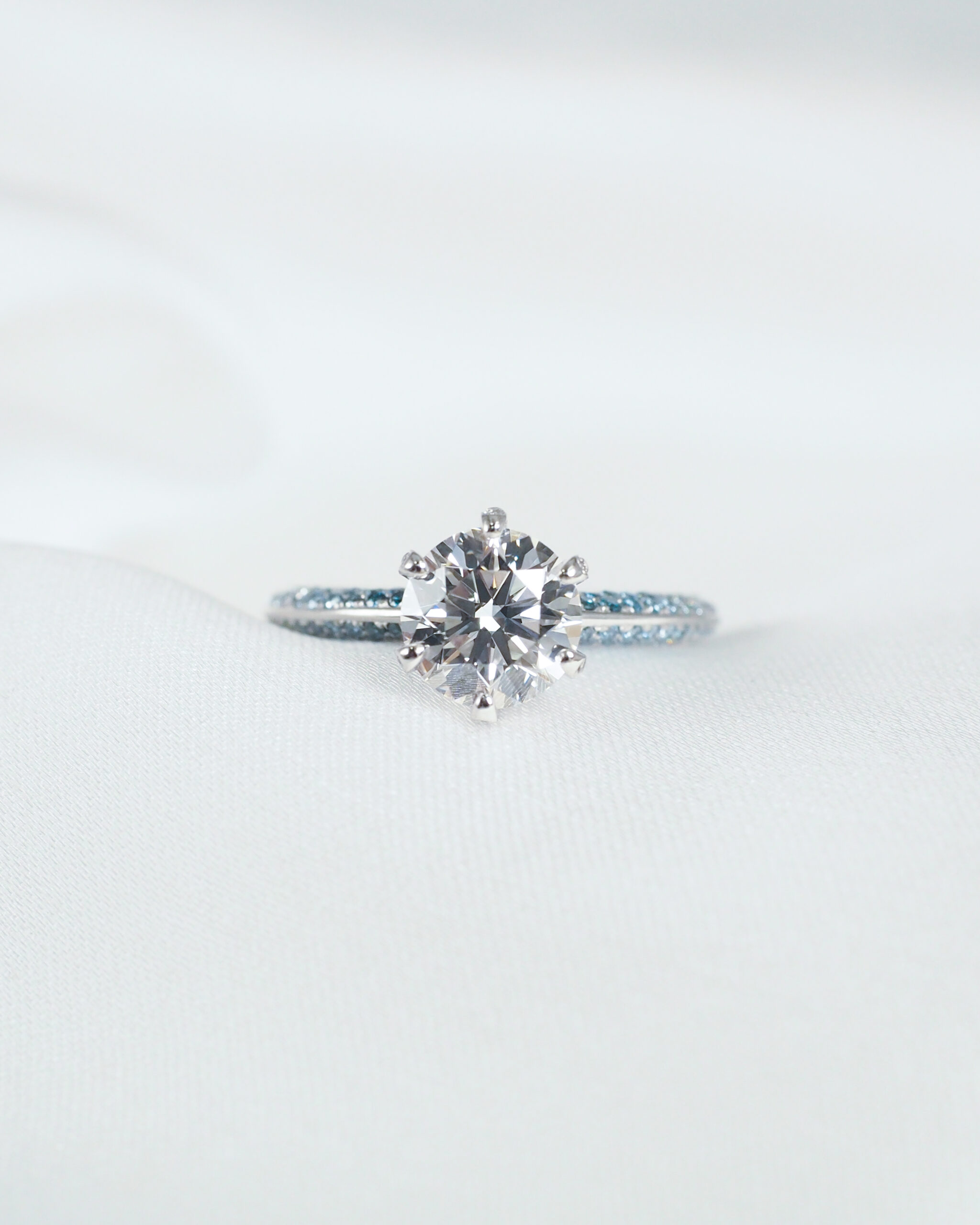

1. What are 4-prong and 6-prong settings?
A 4-prong setting uses four metal prongs to secure the diamond, with one prong in each direction, exposing more of the diamond's surface. A 6-prong setting uses six evenly spaced prongs, offering greater coverage and a rounder outline. Both are common classic setting styles, especially suitable for solitaire rings.
2. Four-Prong vs. Six-Prong: A Comparative Table
| Comparison Item | Four-Prong (Appears Larger · Modern) | Six-Prong (Stable · Classic) |
|---|---|---|
| Diamond Exposure | More, allows more light in | Less, covers more edges |
| Visual Size | Appears larger | Rounder, fuller outline |
| Sparkle Effect | More brilliant, highlights the main stone | Soft, understated, classic |
| Support Points | 4 | 6 (two extra supports) |
| Style | Minimalist, modern, clean lines | Traditional, classic, Tiffany style |
| Best for | Those who want the diamond to appear larger, prefer minimalist style | Those who prioritize security, larger diamonds |
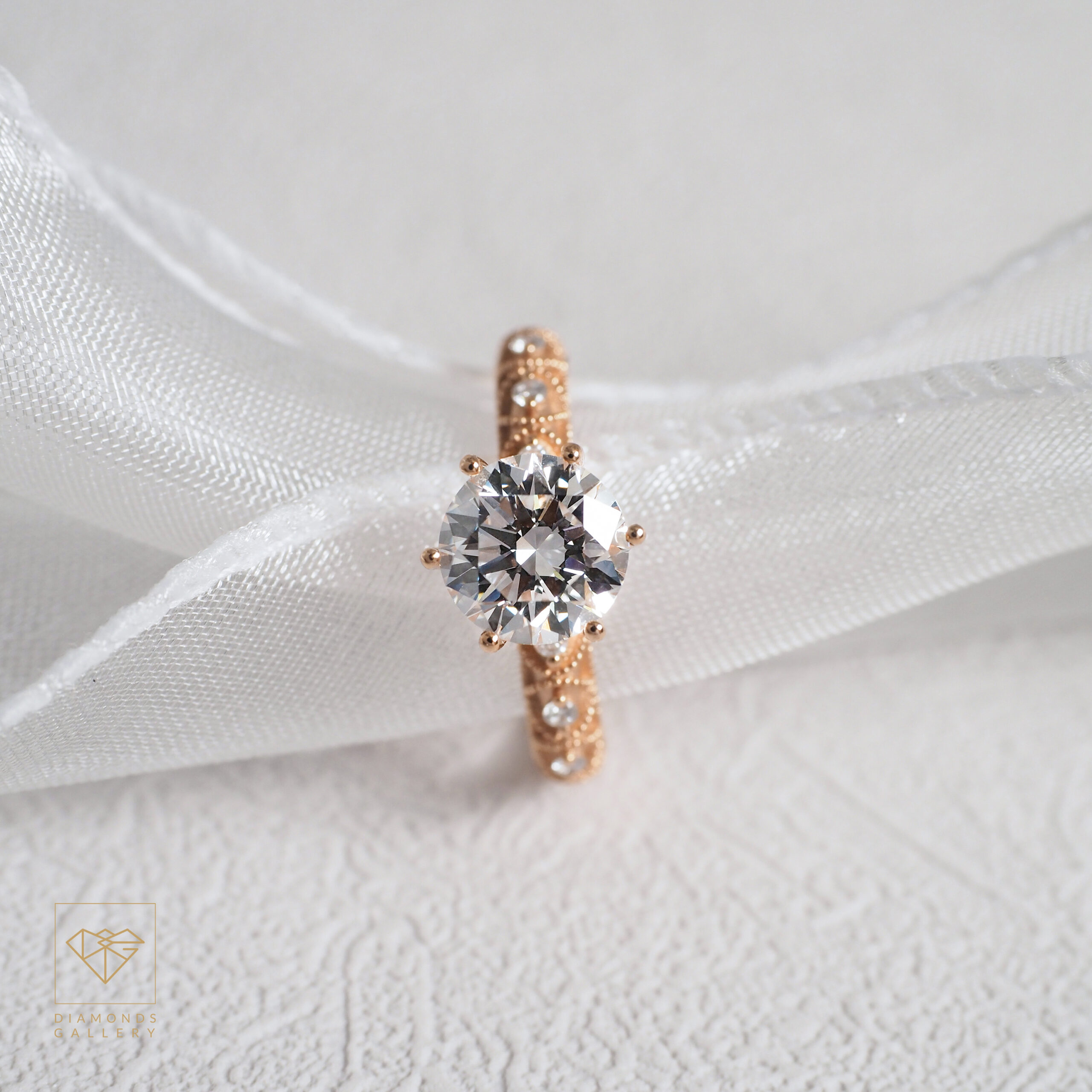
3. Is a six-prong setting really more secure?
Theoretically yes, but the difference is not as significant as imagined. A six-prong setting has two additional support points to secure the diamond, so even if one prong loosens, there are others to provide support, making it more suitable for diamonds 1.5 carats or larger. However, in reality, a four-prong setting is also very secure with good craftsmanship, as modern jewelry craftsmanship is advanced, and the thickness and structural design of the prongs are more critical than the number of prongs.
The factors that truly affect security include: the thickness and strength of the prongs, the setting craftsmanship, daily wearing habits, and regular inspections – not merely the number of prongs.
4. Recommended Prong Settings for Different Diamond Shapes
| Diamond Shape | Recommendation | Reason |
|---|---|---|
| Round | Four-prong or six-prong are both suitable | Four-prong is more modern, six-prong is more classic; depends on style |
| Oval / Pear / Marquise | Six-prong or more recommended | Longer shape, uneven stress distribution, requires more support points |
| Princess / Square | Four-prong (V-prong design) recommended | Protects sharp corners, cleaner appearance |
5. How to choose the best one for you?
Choose four prongs if you: want the diamond to appear larger, prefer a minimalist modern style, or favor clean lines.
Choose six prongs if you: prioritize security, like classic styles, or have a larger diamond (1 carat or more).
When making your actual selection, it's advisable to prioritize the overall design proportion (more important than the number of prongs), wearing comfort, and daily usage scenarios. Because the best ring isn't just about security, it's the one you'll want to wear every day.
Conclusion
There is no absolute good or bad between four and six prongs: Four prongs = appears larger, simple, modern; Six prongs = stable, classic, secure. While the statement "six prongs are definitely more secure" has some truth, the real key lies in craftsmanship and maintenance, not solely the number of prongs. Diamonds Gallery will recommend the most suitable setting method based on the proportion and design of each diamond, achieving the best balance between aesthetics and security for you.
Frequently Asked Questions


